
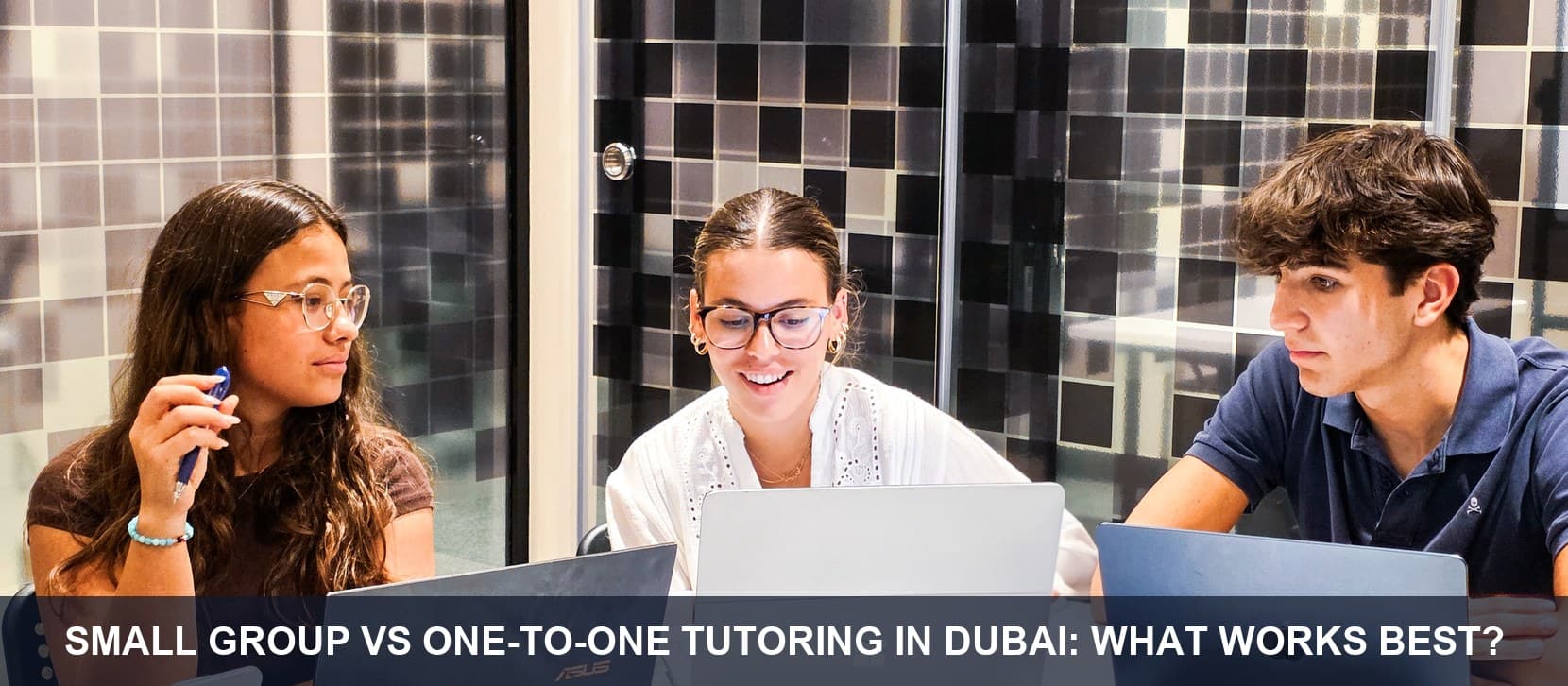
Quick Answer: One-to-one tutoring gives a student a tutor’s full attention and suits big learning gaps or exam panic. Small group tutoring, usually two to six students, costs less and adds peer discussion and routine. For many Dubai students, a small group is the better everyday format, with one-to-one kept for specific, short-term problems.
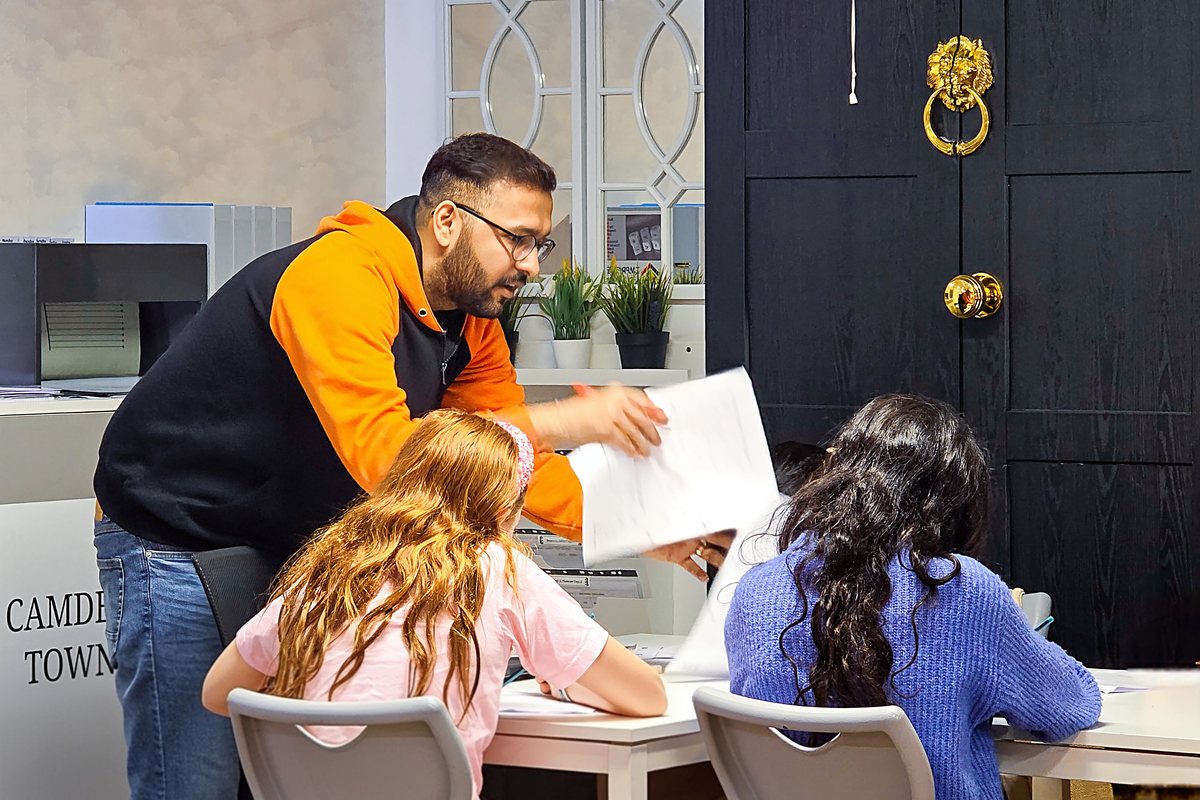
Most Dubai parents ask which tutoring format is “better”. That’s the wrong question. The useful one is which format fits your child, right now, in this subject.
One to one tutoring in Dubai feels like the premium choice, and sometimes it is. But a small group can beat it for the right student, and the choice matters even more for families homeschooling in Dubai who need structure as well as teaching. Here’s how to tell the two apart without guessing.
What Is the Real Difference Between Small Group and One-to-One Tutoring in Dubai?
One-to-one means one tutor, one student, and a lesson built entirely around that child. Small group means one tutor teaching several students at once. The Education Endowment Foundation (EEF), the UK charity behind the widely used Teaching and Learning Toolkit, defines small group tuition as two to five pupils with one tutor.
Group size is where parents get caught out. A “small group” of ten is a classroom with a nicer name. At Improve ME Institute, a licensed tutoring centre in Dubai, groups are capped at six students, and most sessions average two to three, as the fees and pricing page explains. That is close to the EEF’s definition, and it changes what a lesson feels like.
What Does the Research Say About Each Format?
Start with Benjamin Bloom, the University of Chicago psychologist. His 1984 “2 sigma problem” paper reported that students taught one-to-one outperformed classroom learners by about two standard deviations. It is the most quoted result in tutoring, though later studies found smaller effects.
The EEF’s numbers are more realistic. Its Toolkit puts one-to-one tuition at roughly five months of extra progress a year and small group tuition at roughly four. Here’s the thing most people miss: that one-month gap is small, while the cost gap is not. Both beat doing nothing, and both work best when sessions follow the school curriculum.
Maths shows this clearly. A child stuck on algebra needs a tutor to spot the exact misconception, and a small group can do that when students are grouped by level. The mathematics tutoring programme works on that principle.
How Do the Two Formats Compare Side by Side?
| Factor | One-to-one tutoring | Small group tutoring |
| Tutor attention | 100% on your child | Shared, but still personal at 2-3 students |
| Pace | Set entirely by the student | Set by the group’s level |
| Typical EEF progress | About +5 months | About +4 months |
| Cost per student | Highest | Lower, as the tutor’s time is shared |
| Peer learning | None | Built in |
| Best for | Large gaps, anxiety, unusual schedules | Steady progress, exam routine, motivation |
| Main risk | Dependence on the tutor | A mismatched group slows your child |
No column wins everything. If you want the wider context, our guide to choosing the right tutoring support in Dubai walks through the other decisions that sit around this one.
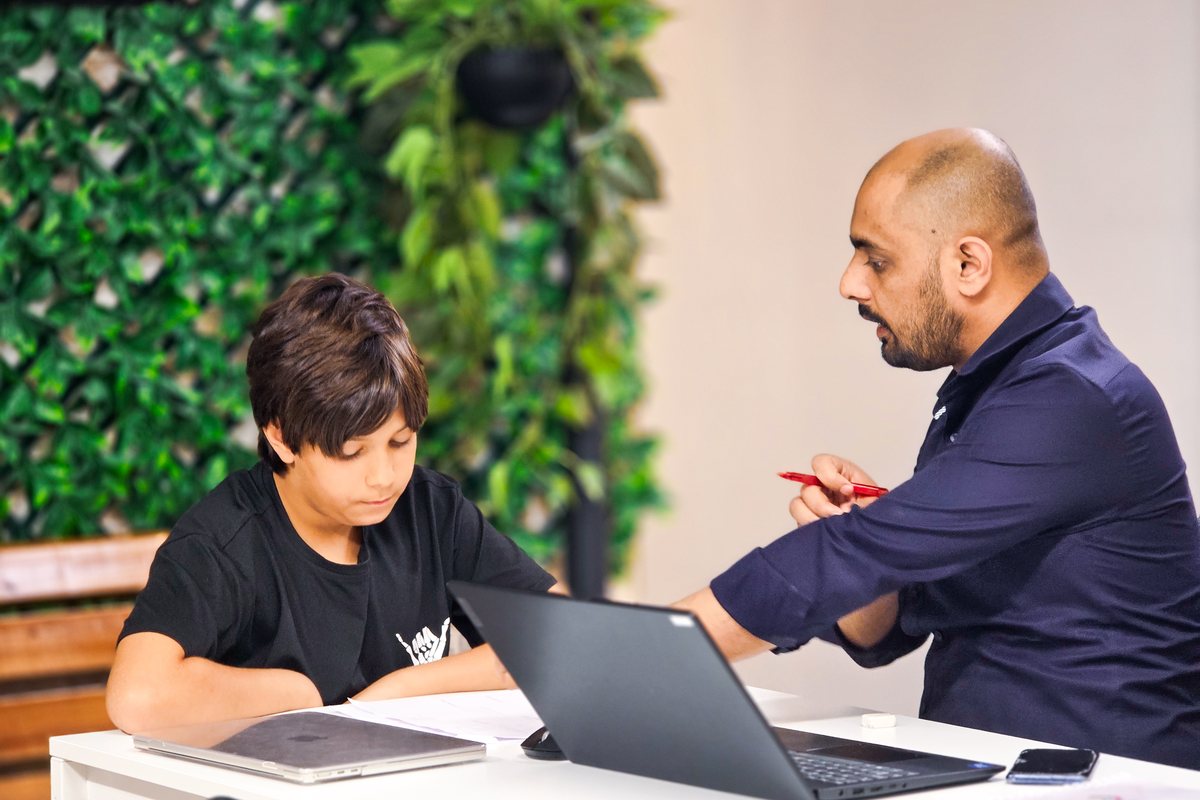
When Does One-to-One Tutoring in Dubai Make More Sense?
One-to-one earns its price in a few specific situations:
- A large gap. A Year 10 student who missed foundations in Year 8 can’t follow a group lesson, however small.
- Exam anxiety. Some children won’t ask questions in front of peers, so nothing gets fixed.
- A tight deadline. A resit or an October series exam may leave no time for the group’s pace.
- Complex timetables. Students switching between curricula after a move often need a bespoke plan.
Picture a Year 11 student who has a strong grasp of everything except one unit of chemistry. Eight weeks of focused work on that unit, with a tutor who checks each answer, is a sensible use of one-to-one. For a student on an IGCSE route, the IGCSE curriculum pages show how many units sit behind a single grade, which helps you decide where the real gap lies.
When Does a Small Group Work Better?
Most children don’t have one dramatic gap. They have a patchy understanding, a busy week and a wandering attention span. A small group handles that well, and it does something a single tutor can’t: it lets your child hear other students get things wrong.
That matters more than parents expect. In English, a group discussing an unseen poem will surface interpretations your child would never reach alone. That is why English tutoring works well in small groups, where one student’s reading sparks another’s.
Groups also build routine, and routine is what exams reward. Mock papers sit naturally in a group setting, so mock exam preparation is a strong fit when your child needs timed practice and honest feedback.
My view: for most Dubai students, a group of two or three is the sweet spot. It keeps much of the personal attention of one-to-one at a lower price.
Which Format Suits Homeschooling in Dubai?
Homeschooling removes the school day’s structure, so the tutoring format has to supply it. A child who studies alone all week and then sees a tutor alone may never work with another learner. Isolation is the risk parents most often underestimate.
A blended pattern usually works best:
- Small group sessions for core subjects, giving rhythm and peers
- One-to-one top-ups, short and targeted, for a weak topic
- Regular mocks, so progress is measured rather than assumed
Improve ME Institute’s homeschooling programme in Dubai is built around small-group teaching, a personalised learning plan, and private candidate guidance for exams. It currently points families to Edexcel IGCSE and International A-Level as pathways to discuss. If you’re still weighing up whether to leave school at all, homeschooling vs school in Dubai lays out the trade-offs honestly.
Regulations around home education can change, so confirm current requirements with the relevant Dubai authorities before you commit.

How Much Do the Two Formats Cost?
One-to-one costs more because the tutor’s whole hour belongs to one family. Small group fees spread that hour across several students, which is why groups are the cheaper route to the same weekly contact time.
Improve ME Institute lists session rates from AED 200 for secondary year groups, charged per subject, with lower rates when a student takes several subjects. Add 5% VAT, and ask about enrolment fees up front. Cheap sessions with no real progress tracking cost more in the long run than fair fees with clear reporting. For younger secondary students, Key Stage 3 support is often where a small group pays off fastest, since the gaps haven’t hardened yet.
How Do You Choose the Right Format for Your Child?
Skip the sales pitch and run a simple test:
- Find the gap. Is it one topic or a whole subject? One topic points to short one-to-one. A whole subject points to a group.
- Check the temperament. Does your child speak up in class? If yes, groups are fine.
- Count the weeks. Under six weeks to an exam favours intensive one-to-one. Over a term favours a group.
- Test it. Book a trial before you pay for a block.
A free assessment does steps one and two properly. Combine it with an educational counsellor in Dubai if the tutoring decision is tied to subject choices or university plans.
For tutors versus centres, the home tuition vs tuition centres comparison covers the other half of the decision.
What Do Parents Ask Most About One-to-One and Group Tutoring?
Q: Is one to one tutoring in Dubai worth the extra cost?
A: Sometimes. It’s worth it for a large gap, a tight deadline, or a child who won’t speak in a group. For steady progress, a small group usually gives better value.
Q: How many students are in a small group?
A: The EEF defines it as two to five pupils. Improve ME Institute caps groups at six, with the most averaging two to three.
Q: Can I switch from group to one-to-one later?
A: In most cases it can be discussed, though availability varies. The FAQ page covers enrolment questions, and the team can confirm what’s possible for your child’s subject.
Q: Is a small group enough for GCSE or IGCSE preparation?
A: Often, yes. A well-matched group covers the specification, past papers, and exam techniques. Add short one-to-one sessions only where a topic keeps slipping. See the GCSE pages for the subjects covered.
Q: How long does it take to see results?
A: Confidence often improves within a few weeks of regular sessions. Grade changes take longer, usually a full term.
So, Which One Should You Pick?
If your child has one stubborn problem, go one-to-one for a short, focused spell. If they need steady progress, routine, and company, choose a small group and add a top-up when a topic slips. Neither is a status symbol. The right answer is the one your child will actually turn up for.
Not sure which fits? Book a free assessment and the team will recommend a format, frequency and package before you pay anything. You can also read more about Improve ME Institute first.