
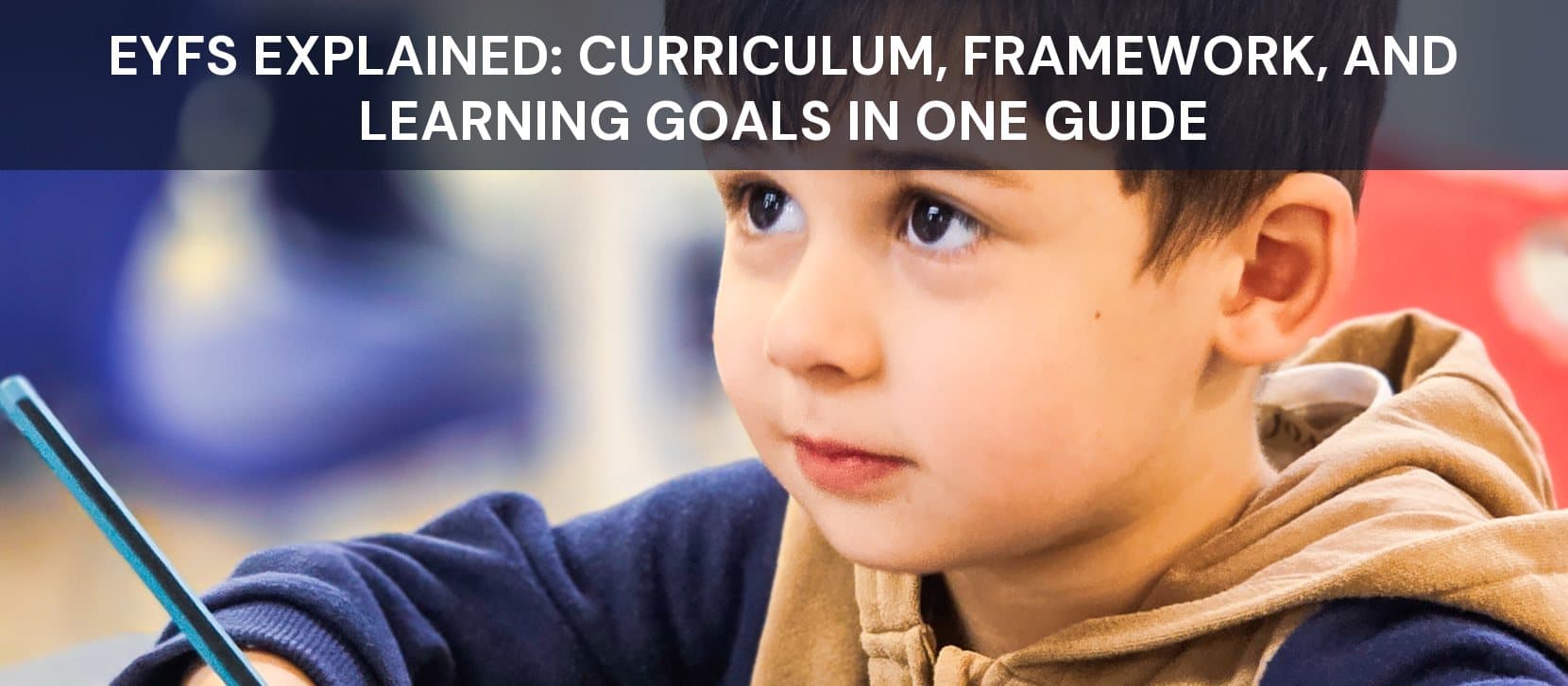
Parents and educators in Dubai often hear the term EYFS, but many are still unsure what it truly means and why it is so important for young children. This guide explains everything in very simple English. By the end, you will clearly understand the early years foundation stage EYFS curriculum, how the EYFS curriculum works, and what the early years foundation stage EYFS framework expects from nurseries and early learning centres.
What Is EYFS?
EYFS stands for Early Years Foundation Stage. It is a learning system designed for children from birth to 5 years old. This stage is very important because it shapes how children think, learn, speak, and interact with others.
In Dubai, many nurseries and early education centres follow the EYFS approach because it supports balanced learning. It does not rush children. Instead, it focuses on helping them grow step by step through play, care, and guided activities.
Why EYFS Matters for Children in Dubai
Dubai is home to families from many cultures. Children grow up in a fast-moving world with different languages and lifestyles. The EYFS system helps children feel safe, confident, and ready for school, no matter their background.
The early years foundation stage EYFS framework supports:
- Emotional growth
- Social skills
- Early reading and maths
- Physical movement
- Creative thinking
It prepares children not just for school, but for life.
Understanding the EYFS Framework
The early years foundation stage EYFS framework is the foundation of the entire system. It sets clear standards for how children should be cared for and taught.
The framework is built on four simple ideas:
1. Every Child Is Unique
Each child learns in their own way. EYFS respects this and supports different learning speeds and styles.
2. Positive Relationships
Children learn better when they feel loved, safe, and supported by adults.
3. Enabling Environments
The learning space should be safe, fun, and full of chances to explore and play.
4. Learning and Development
Children learn through play, talking, moving, and exploring the world around them.
What Is the EYFS Curriculum?
The EYFS curriculum explains what children should learn during their early years. It focuses on learning through play, not pressure or exams.
The early years foundation stage EYFS curriculum is divided into seven areas of learning. These areas work together to support full child development.

The 7 Areas of Learning in EYFS
Prime Areas (Core Skills)
These are the most important areas and start first:
1. Communication and Language
Children learn to listen, understand, and speak. This includes stories, songs, and simple conversations.
2. Physical Development
This supports movement, balance, and hand skills. Activities include running, jumping, drawing, and cutting.
3. Personal, Social, and Emotional Development
Children learn to share, manage feelings, and build confidence.
Specific Areas (Building Knowledge)
These areas grow from the prime areas:
4. Literacy
Children start to enjoy books, sounds, and early writing. For families looking to strengthen early literacy skills, Our EYFS English Tutoring provides focused support that builds strong communication and reading foundations.
5. Mathematics
They learn numbers, shapes, and simple problem-solving through games and activities. Extra support such as EYFS Mathematics Tutoring helps children understand maths concepts in a fun and confidence-building way.
6. Understanding the World
Children explore nature, people, technology, and different cultures, which is very relevant in a diverse city like Dubai.
7. Expressive Arts and Design
This includes music, art, dance, and pretend play.
Learning Goals in EYFS
Learning goals are clear targets children usually reach by age five. These goals are flexible and child friendly. There is no pressure to be perfect.
Teachers observe children during daily activities and gently guide them forward. This makes learning natural and enjoyable.
How EYFS Supports Teachers and Parents
The EYFS curriculum is not only for children. It also helps adults understand how to support learning at home and in school.
Parents are encouraged to:
- Talk and read with children daily
- Support play-based learning
- Build routines and emotional safety
Teachers use observations instead of tests to understand progress. For educators planning professional growth, Career Guidance in Dubai offers helpful direction for building a strong future in early years education.
EYFS in Dubai: A Strong Choice
Many parents in Dubai choose EYFS-based nurseries and training centres because the system is trusted worldwide. It fits well with international schools and supports smooth transitions into primary education.
EYFS also values creativity, kindness, and confidence-skills that are essential for children growing up in a global city like Dubai.
How Improve ME Institute Supports EYFS Excellence
At Improve ME Institute, EYFS is more than a curriculum-it is a promise to support strong early education in Dubai. The institute focuses on professional development, practical training, and real-world learning.
Whether you are a teacher, nursery owner, or early years professional, Improve ME Institute helps you:
- Understand the early years foundation stage EYFS framework clearly
- Apply the EYFS curriculum in simple, effective ways
- Build confidence in supporting young learners
With expert guidance and hands-on learning, Improve ME Institute helps raise the standard of early years education across Dubai.
Final Thoughts
The early years foundation stage EYFS curriculum is designed to help children grow happily, safely, and confidently. It focuses on play, care, and strong relationships. For families and educators in Dubai, EYFS offers a trusted and flexible path for early learning success.
Choosing the right support and training makes all the difference-and that is where Improve ME Institute stands out.
Frequently Asked Questions
1. What age group is EYFS for?
EYFS is for children from birth to 5 years old.
2. Is EYFS suitable for Dubai schools?
Yes, many Dubai nurseries and schools successfully follow EYFS.
3. Does EYFS use exams or tests?
No, EYFS uses observation and play-based assessment.
4. Can parents support EYFS learning at home?
Yes, reading, talking, and play help children learn faster.
5. Where can teachers get EYFS training in Dubai?
Improve ME Institute offers trusted EYFS-focused training and support.